
Bonus kerb appeal
From an aesthetic point of view, telescopic bollards can make your property more noticeable, whether it's turning more customers' heads, or boosting the kerb appeal of your home. You can also get them in different styles and colours to match any business branding, for an added touch of class.
Equally, as you can control them if you wish for them to be more discreet, you can lower your bollards as and when you want.
More peace of mind
Last but not least, the combination of all the above means you can make the most of the added peace of mind that your investment in automatic bollards is bringing you as there are so many benefits.
Extra security
Firstly, automatic bollards are a means of protecting your home and/or business both inside and out. They'll prevent any vehicle theft from your property if they're installed on your driveway or site exits and, moreover, they'll stop any unauthorised vehicles and would-be thieves from entering these areas.
Added convenience
Unlike other types of bollards, automatic ones are also more convenient and don't require any manual effort on your part to move them. To build on the previous point, they also give you more control over your security.
Improved safety
By being able to control your automatic bollards – and by simply having them as a barrier – it means any drivers who want to get on to your property will have to either stop or slow down. In turn, this means you're less likely to suffer any damage to your buildings from careless drivers and your drives or access points will be much safer. This is ideal for businesses that also have high customer footfall.

How Does Hydraulic Bollards Work?
A hydraulic bollard system is a security and access control solution commonly used in commercial and high-security environments to regulate vehicle traffic and provide perimeter protection. Consisting of retractable bollards operated by hydraulic mechanisms, these systems offer a robust and reliable means of controlling vehicle access while maintaining aesthetic appeal.
Hydraulic bollard systems operate using hydraulic power to raise and lower bollards as needed. Each bollard is mounted in a reinforced foundation below ground level and connected to a hydraulic pump and control system. When activated, the hydraulic pump applies pressure to a piston, causing the bollard to extend above ground level to block vehicle access. Conversely, when the bollard needs to be lowered to allow passage, the hydraulic pump retracts the piston, allowing the bollard to sink below ground level.
How Do Hydraulic Bollards Meet Crash Ratings?
The two most relevant crash rating standards for bollards in the United States are the ASTM F2656-07 and ASTM F3016-14. Both of these standards specify how bollard manufacturers should crash test their products to ensure they can stop a vehicle that runs into them. ASTM F2656-07 is the standard test for security barriers, and ASTM F3016-14 is designed to test barriers' capabilities against a vehicle going 30 mph or less.
These crash tests are critical to demonstrate that a bollard's ability to stop vehicles is proven and not just theoretical. A bollard wouldn't pass these crash tests if poorly constructed or made from weak materials. Automatic steel bollards meet these industry standards, so you know they will do their job effectively, even in a dangerous crash. This is important since storefront crashes occur roughly 60 times every day.

Installation of Hydraulic Bollards
To install an automatic bollard, you must first dig up the area where the bollard will go. In some cases, this may mean breaking up concrete or asphalt or raking away gravel. Once the surface layer above the dirt has been removed, you can dig a hole using an auger or posthole digger. This hole should match the depth of the bollard.
Now, you can position the bollard — already contained in its rectangular steel encasement — in the hole. The rectangular casing and the top of the bollard should be level with the ground when the bollard is put away so cars can quickly drive over the area as long as the bollard is not raised.
Another aspect of the installation may include running electrical wire to a control panel, though this step isn't required for wireless options. Whatever control method is employed, properly installed automatic bollards will rise out of their rectangular casing on command, provide an effective barrier as needed, and descend back into the casing when you want them out of the way.
Automatic bollards can rely on electric, pneumatic or hydraulic power units for operation. Hydraulic is the most powerful option and can raise and lower the bollards within seconds of you pressing a button or entering a code.
Provided you own the land, it is perfectly legal to install a bollard on a private driveway in the UK. If your home is leasehold, or if you are renting, you must seek approval from the landlord before installing residential driveway bollards.
In most cases, residential driveway bollards do not need planning permission. However, you should check with your local council to ensure compliance with any specific regulations in your area. Bollards for driveway use should always be plainly visible to road users.
Applications of Hydraulic Bollards
Bollards can be an effective method of perimeter security, preventing vehicles from accessing pedestrian sidewalks or restricted areas or colliding with buildings. Some of the more common bollard applications include the following:
Government Building Security:
As seen in numerous terror attacks across the world, it is a frightening possibility that malicious parties can weaponize vehicles and convert them into lethal tools for terrorist groups.
For many government facilities worried about such attacks, crash rated bollards are a security measure of choice. Crash tested/rated bollards have the ability to restrict vehicle access to areas surrounding military and government facilities, as well as penal institutions. Unlike fixed solid barriers, bollards allow personnel access while restricting vehicles and can be removed or retracted to allow authorized vehicles access as needed.
Storefront Security:
Another common use for crash rated bollards is the prevention of vehicle collisions with storefronts. 23% of these crashes occur with retail stores, 19% with restaurants, 23% with commercial buildings, 9% with convenience stores and 7% with offices. About 36% of the crashes were accidental due to pedal errors.
Get into the habit of regular maintenance for your bollards, including cleaning, inspections, and repairs. On the whole, they are robust pieces of equipment but they're not completely 'fit and forget'. Plus, the better care you take of your bollards, the longer they will last. Staying on top of maintenance tasks and keeping an eye on your bollard for signs of damage or wear all contribute to its long-term effectiveness. So where do you start?
Inspections
Inspect bollards regularly to ensure they are in good condition. Check for signs of damage, such as dents, cracks, worn locks or rust. An inspection doesn't have to mean you're inspecting every nut and bolt, but making sure that you take notice of your security bollard's appearance and that you're vigilant in checking for any signs of damage will help prolong the life of your bollard and keep any repair costs down if needed.
Retractable bollards can also be susceptible to user damage if they aren't lowered properly. If a bollard is repeatedly dropped instead of lowered by hand, the base can suffer damage. Elements of the locking mechanism are often seated in the base, so being aware of how bollards are used should make up part of your ongoing inspection.
Regular cleaning
Bollards should be cleaned periodically to remove dirt, debris, and other contaminants that could corrode the surface or damage the mechanism of the bollard. Depending on the material of the bollard, different cleaning techniques may be required. With lift-out or retractable bollards, this is also important to ensure that the mechanisms under the ground aren't affected by any build-up of dirt or debris that could block the bollard and stop you from lifting it out.
Repairing
If a bollard is damaged, quite often it will be possible to repair it instead of replacing it outright potentially saving you a considerable sum. Some repairs can be done by owners, such as replacing a lock, the locking mechanism or a handle and are relatively simple operations for anyone who is relatively competent at DIY tasks.
Bollards are installed for various reasons, including traffic control, security, and architectural enhancement. Over time, exposure to environmental elements, vehicular impact, and general wear and tear can compromise their effectiveness. Therefore, regular maintenance is essential for the following reasons:
Preserve safety
Well-maintained bollards provide a reliable barrier against unauthorized vehicular access, preventing accidents and enhancing pedestrian safety.
Prolong lifespan
Routine maintenance extends the lifespan of bollards, saving costs associated with frequent replacements and ensuring a consistent level of protection.
Enhance aesthetics
Properly maintained bollards contribute to the overall aesthetic appeal of public spaces and private properties, presenting a polished and well-cared-for appearance.
When choosing the best bollard for your business, there are many factors that you need to take into consideration. These include its purpose, the materials used, ease of installation, and costs.
Purpose of the bollard
Bollards serve a myriad of purposes that protect not only you and your business but also your investment. One of these purposes is that bollards protect against potential thieves or terrorists from crashing a vehicle through the front of your building and, afterward, looting your goods or data.
Materials used
When choosing the best bollard for your business, one of the most important factors to consider is the material used to make it. Furthermore, you can invest in bollard post covers to give additional protection.
Installation
To install a bollard, first, you must make sure that you contact your local Building Code Department regarding bollard code requirements to make sure you get the correct permits before you proceed. Afterward, you might want to consider hiring an architect to create a site plan to figure out the installation method and spacing that would best utilize your bollards. Finally, you need to clean your site, create a concrete base if your surface is not already concrete, and install your bollard based on what type you chose to install.
Cost
The bollards' cost depends on many factors. They include the size, material, and how many of them you need for your business. It is generally best to go with concrete bollards since they are cost-effective and are reliable. However, if you need a removable bollard, get ready to invest more.
Maintenance
Most would think that since bollards are durable enough to withstand car crashes, they will not require maintenance. That is far from the truth. If your bollards are decorative, you might want to consider maintaining a consistent cleaning and repainting schedule. Otherwise, for security bollards, service them at least once a year to reinforce their durability. Doing regular maintenance makes it so bollards can continually protect your assets and your people.
Final thoughts
Bollards can do a lot for a business, whether it is protecting them from vehicular assaults or preventing unwanted visitors from entering a parking lot in the middle of the night. Now you might have a better idea of how they're made, what they do, and how to choose the best bollard for your needs.
Our Factory
Xiamen Jietian Technology Co.,Ltd established in 2006,is a professional manufacturer engaged in the research,development sale and service of Bollard,Road Blocker,Tire Killer,License Plate Recognition System,Barrier Gate,Car Charging Pile etc and other anti-explosion one-stop facility solutions provider.
Xiamen Jietian Technology Co.,Ltd with years of product research and development, continuous innovation and product sales network throughout the country, serving more than 100,000 customers, exported to Italy, Britain, Germany Countries, Japan and other parts of the world.
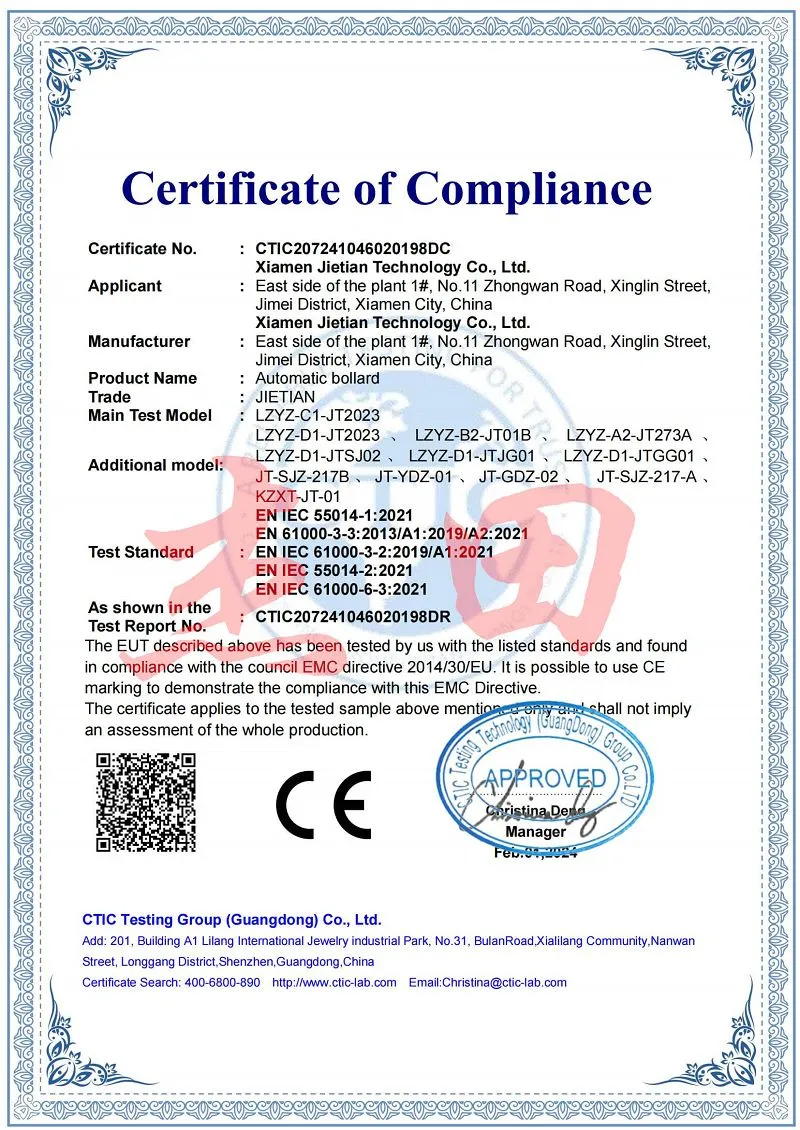
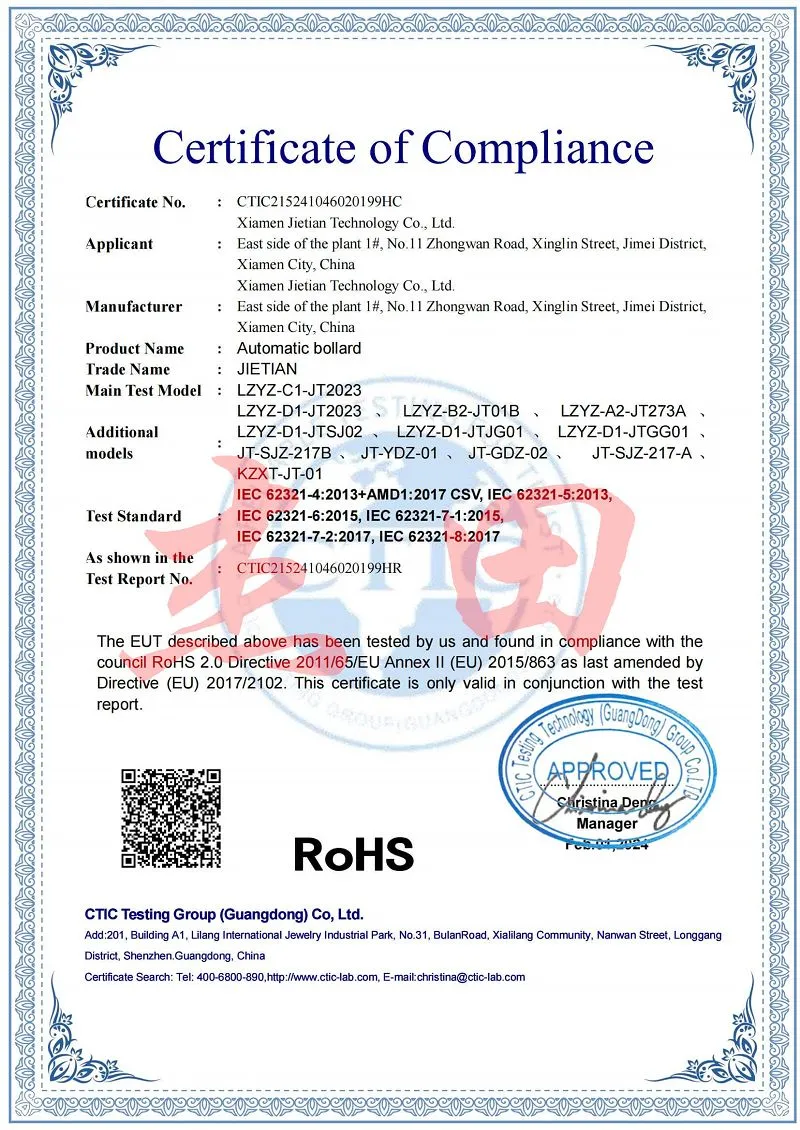


We're professional hydraulic bollards manufacturers and suppliers in China, specialized in providing high quality customized service. We warmly welcome you to wholesale high-grade hydraulic bollards made in China here from our factory.
driveway hydraulic bollards, hydraulic rising bollards, hydraulic bollard system(0/10)



